

Real-Time XRF Field Analysis
When you need to understand a material’s elemental composition, field analysis can help you decide what to investigate next.
- ✓ Serving Orange County, Aliso Viejo, Anaheim and 32 more areas

Elemental information at the point of testing
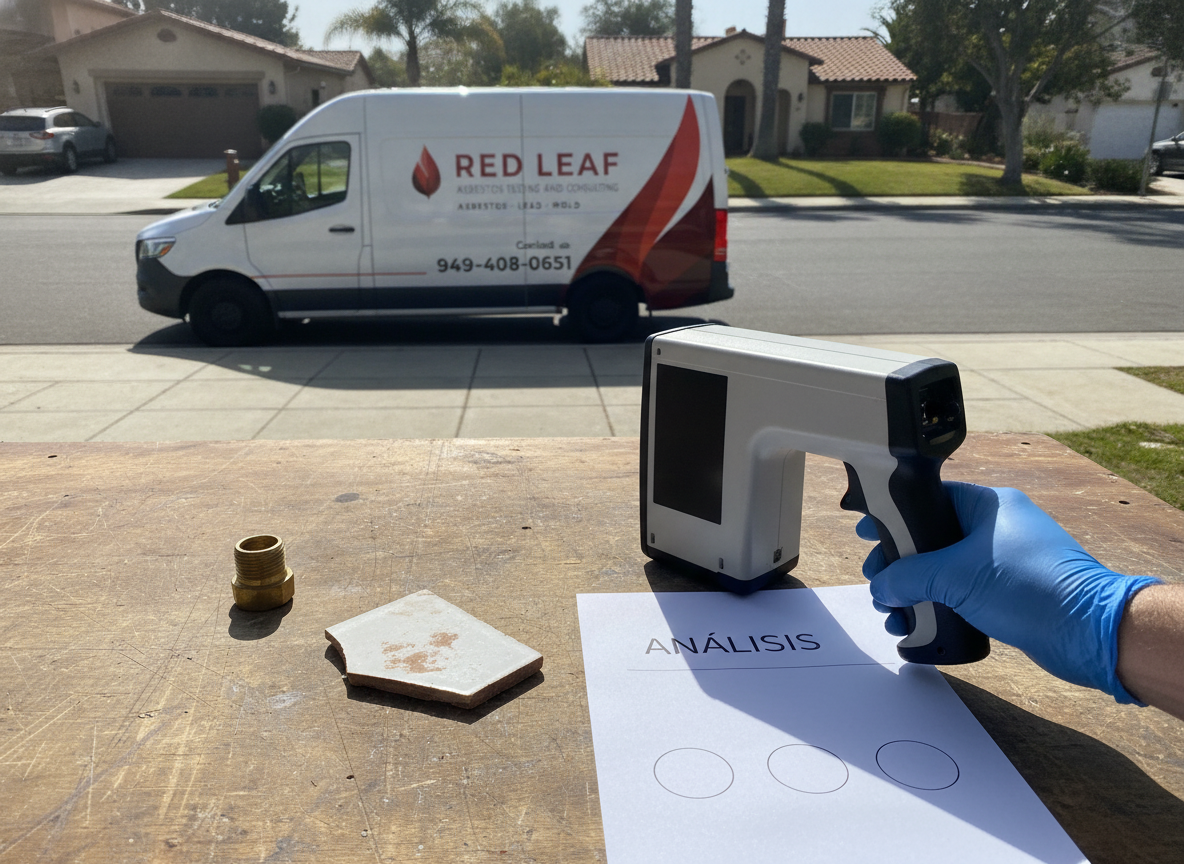
Red Leaf Asbestos Testing And Consulting provides Real-Time XRF Field Analysis. XRF stands for X-ray fluorescence, an analytical technique used to examine the elemental composition of materials.
In general, XRF works by exposing a material to X-rays and measuring the characteristic energy emitted by elements within it. Field instruments bring that measurement capability to the testing location, rather than making every initial assessment dependent on laboratory analysis.
The practical value is information that can inform the next decision. The important question is not simply whether an instrument produces a reading, but whether that reading addresses the concern behind the testing.
Start with the question you need answered
XRF may be worth discussing when your concern involves which elements are present in a material. It is not a universal test for every environmental concern: elemental analysis is different from identifying mold, bacteria, or individual chemical compounds.
Before requesting testing, describe the material, its location, and the reason you are investigating it. A question about a particular element calls for a different assessment than a broad concern about an unfamiliar residue. Defining that question helps establish whether XRF is an appropriate starting point.
The material affects what a reading means
XRF results depend on more than the instrument alone. Material composition, surface condition, coatings, thickness, and measurement conditions can affect interpretation. A reading from one accessible location does not automatically describe an entire object, structure, or property.
For that reason, the choice of measurement locations matters. General questions to discuss include which surfaces need examination, whether different materials should be considered separately, and how the testing locations relate to the concern you want addressed.
Real-time readings still need context
“Real-time” describes the availability of instrument measurements during field analysis. It should not be treated as a promise that every project question, written report, or regulatory determination will be completed immediately.
An elemental reading also does not, by itself, establish exposure, identify every chemical form of an element, or determine the correct response. Depending on the purpose of testing, additional investigation or a different analytical method may be needed. The useful outcome is a result interpreted within the limits of the method and the question being asked.
Choose a service around your decision
Red Leaf Asbestos Testing And Consulting offers Real-Time XRF Field Analysis alongside Lead & Heavy Metals Analysis and Pre-Construction Analysis. When you contact the business, explain the decision you need to make rather than requesting a test by name alone.
That conversation can focus on whether field elemental analysis fits your concern, what areas require attention, and what information you need afterward. Ask about the proposed scope and deliverables before authorizing the work.
Questions before arranging field analysis
Can XRF identify every substance in a material?
No. XRF measures elemental information; it does not identify every substance or replace every other type of environmental testing. Suitability depends on the material and the question.
Will one measurement represent the whole area?
Not necessarily. Materials can vary between locations and layers. Discuss the extent of the concern so the proposed testing scope can be considered in context.
Does real-time analysis mean an immediate final report?
Not necessarily. Field measurements and a completed report are different deliverables. Ask what you will receive and when before scheduling.
What should I have ready when I contact you?
Describe the material or surface, where it is located, the reason for testing, and any access constraints. Explain whether the results are intended to support a particular project decision.
Discuss your XRF testing needs
Contact Red Leaf Asbestos Testing And Consulting at 949-408-0651 to discuss Real-Time XRF Field Analysis and the question you need answered.

Areas we serve
- ● Orange County
- ● Aliso Viejo
- ● Anaheim
- ● Brea
- ● Buena Park
- ● Costa Mesa
- ● Cypress
- ● Dana Point
- ● Fountain Valley
- ● Fullerton
- ● Garden Grove
- ● Huntington Beach
- ● Irvine
- ● La Habra
- ● La Palma
- ● Laguna Beach
- ● Laguna Hills
- ● Laguna Niguel
- ● Laguna Woods
- ● Lake Forest
- ● Los Alamitos
- ● Mission Viejo
- ● Newport Beach
- ● Orange
- ● Placentia
- ● Rancho Santa Margarita
- ● San Clemente
- ● San Juan Capistrano
- ● Santa Ana
- ● Seal Beach
- ● Stanton
- ● Tustin
- ● Villa Park
- ● Westminster
- ● Yorba Linda