

Asbestos Testing & Surveys
Before you disturb materials during building work, asbestos testing and surveys can help you understand what needs closer attention.
- ✓ Serving Orange County, Aliso Viejo, Anaheim and 32 more areas
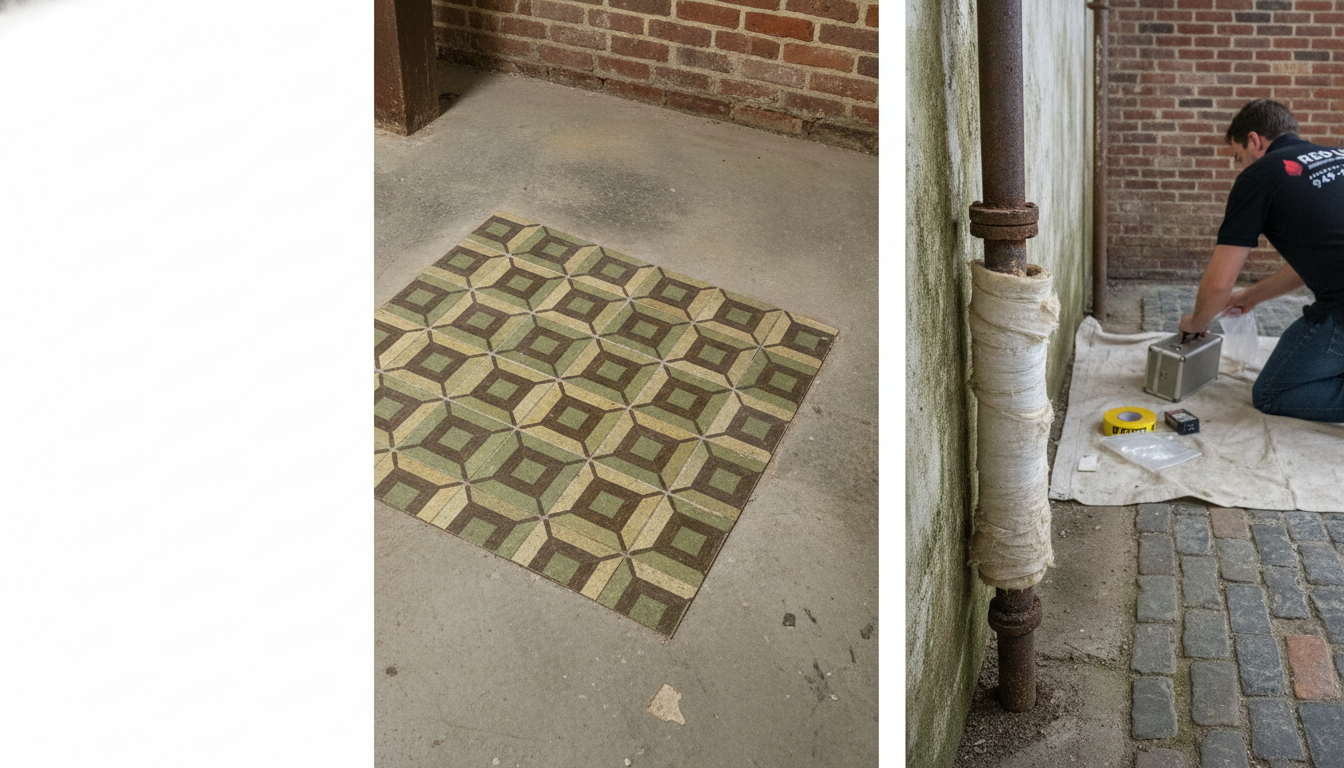
Appearance alone cannot answer the asbestos question
Building materials cannot reliably be identified as asbestos-containing by sight alone. A material’s appearance, location or age may raise a question, but those clues are not a substitute for testing.
Asbestos testing focuses on whether the material tested contains asbestos. A survey considers materials within a defined area or project scope. The distinction matters: a result for one sample does not automatically describe every similar-looking material elsewhere in a building.
Red Leaf Asbestos Testing And Consulting provides Asbestos Testing & Surveys. If you have a particular material in mind—or need to discuss a broader inspection—start by explaining the question your project needs answered.
The planned work helps define the scope
A concern about one material and a project involving several rooms may call for different scopes. Before arranging testing or a survey, consider where work will happen and which materials it could disturb. Floors, walls, ceilings and concealed areas can present different questions depending on the proposed work.
For property owners, buyers and people planning construction, the useful starting point is not simply “Does this building have asbestos?” It is “What do I need to know about the materials affected by this decision?” A focused question helps frame the conversation about appropriate testing or survey coverage.
Do not cut, scrape or remove a suspected material just to investigate it yourself. Discuss the concern before disturbing it.
A useful result has a clearly understood boundary
Testing and survey findings need to be read in context. The material examined, the area covered and any access limitations affect how findings should be understood. A result should not be treated as a blanket answer about materials outside that scope.
When discussing your project, ask what will be assessed and how the findings will relate to your planned work. If your plans change—for example, from replacing a surface finish to opening an entire wall—the original scope may no longer answer every relevant question.
Testing is also distinct from removal. Identifying asbestos does not, by itself, determine a removal method or mean that removal is included in the testing service.
AHERA-certified inspections are part of the service offering
Red Leaf Asbestos Testing And Consulting lists AHERA-Certified Asbestos Inspections among its services, alongside Asbestos Testing & Surveys. That is a specific service distinction to discuss when your project calls for an asbestos inspection.
Choosing an inspection begins with matching the service to the question—not assuming every project needs the same approach. Explain the property, the materials of concern and the decision ahead so you can discuss the appropriate scope before proceeding.
Questions before arranging asbestos testing
Can you tell whether a material contains asbestos from a photo?
A photo can help communicate the location and appearance of a concern, but it cannot establish whether a material contains asbestos. That determination requires more than a visual impression.
Do I need testing or a survey?
Testing addresses the material tested; a survey addresses a defined inspection scope. Whether your question concerns one material or a wider area is an important starting point for discussing which service fits.
Does an asbestos finding mean everything must be removed?
Not necessarily. Decisions depend on factors such as material condition and whether planned work will disturb it. Testing identifies a concern; decisions about managing it require consideration of the circumstances.
What should I explain when I make contact?
Describe the material or area you are concerned about, any planned work and the decision you need to make. Mention any existing asbestos information relevant to that area.
Discuss your asbestos testing needs
Contact Red Leaf Asbestos Testing And Consulting to discuss Asbestos Testing & Surveys and the scope of your project. Call 949-408-0651 or use the contact form to start the conversation.

Areas we serve
- ● Orange County
- ● Aliso Viejo
- ● Anaheim
- ● Brea
- ● Buena Park
- ● Costa Mesa
- ● Cypress
- ● Dana Point
- ● Fountain Valley
- ● Fullerton
- ● Garden Grove
- ● Huntington Beach
- ● Irvine
- ● La Habra
- ● La Palma
- ● Laguna Beach
- ● Laguna Hills
- ● Laguna Niguel
- ● Laguna Woods
- ● Lake Forest
- ● Los Alamitos
- ● Mission Viejo
- ● Newport Beach
- ● Orange
- ● Placentia
- ● Rancho Santa Margarita
- ● San Clemente
- ● San Juan Capistrano
- ● Santa Ana
- ● Seal Beach
- ● Stanton
- ● Tustin
- ● Villa Park
- ● Westminster
- ● Yorba Linda